News
Beyond Morocco: Extraordinary Autumn Migration13/11/2026
This autumn's migration is proving to be one of the most exciting yet for the project. Since our last migration update, this year’s young storks have continued their journeys south, bringing with them some remarkable discoveries and two significant milestones.
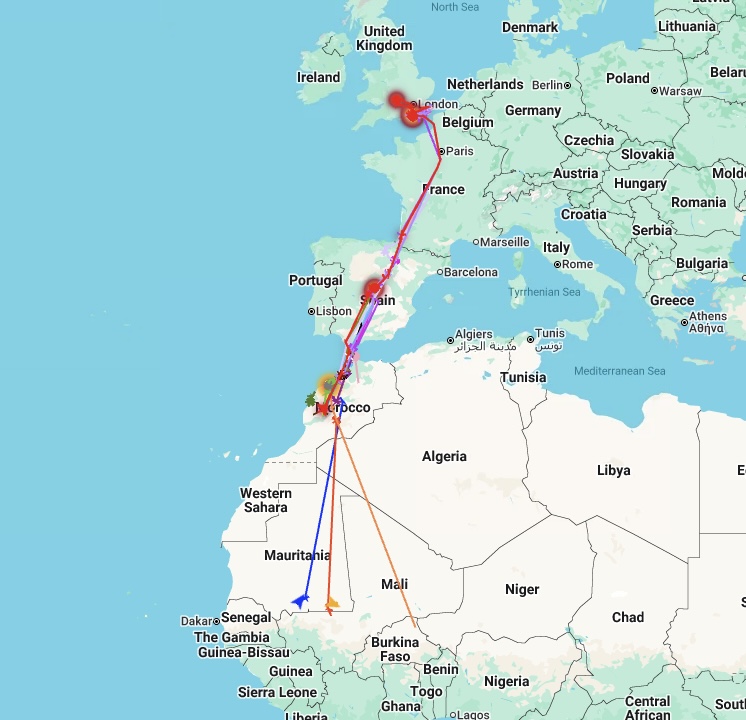
Not only have we recorded the fastest migration from the UK to North Africa so far, but we have also seen project birds travel further south than ever before. Several individuals have passed beyond their usual wintering grounds in Morocco, venturing into West Africa and raising new questions about the journeys our storks are capable of undertaking.
White Stork Migration
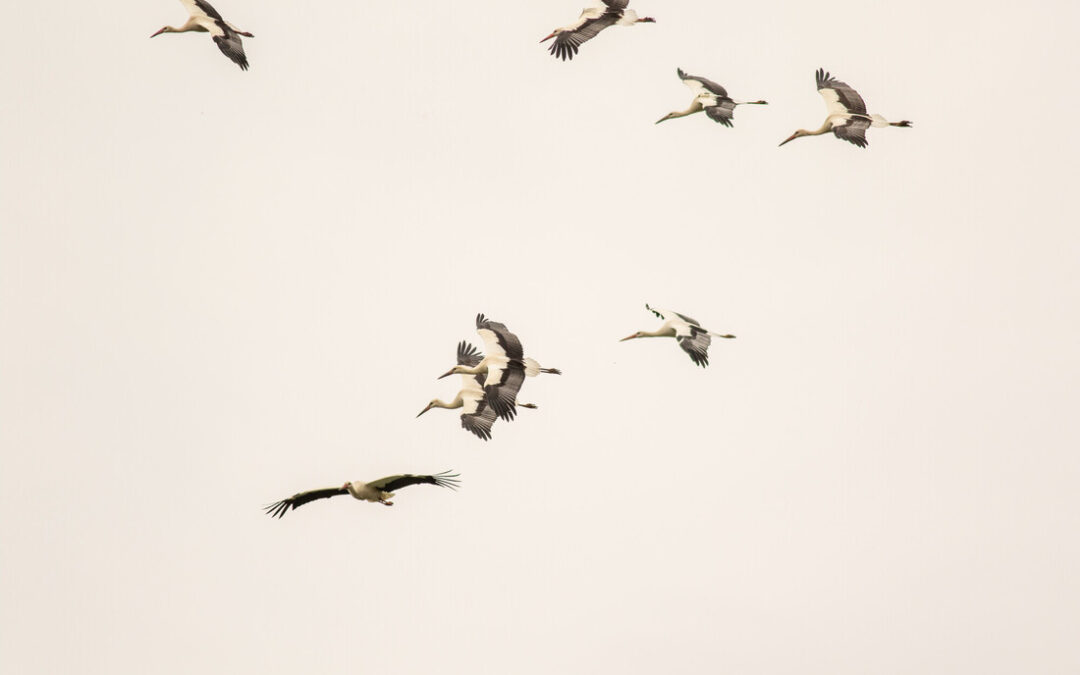
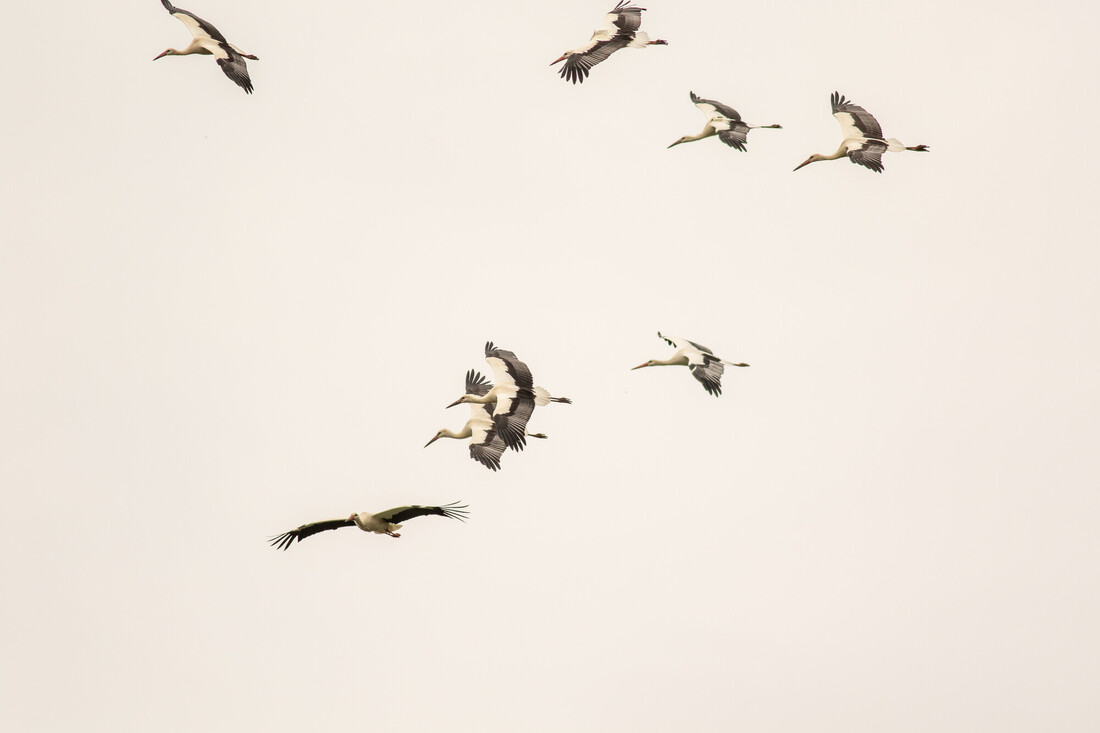
White storks are migratory birds, but populations across Europe follow different routes. Western European populations generally migrate south-west through France and Spain, crossing the Strait of Gibraltar into North Africa. Eastern European populations tend to take a more easterly route, travelling through the Balkans towards southern and eastern Africa.
White Stork Project birds have so far followed the western flyway, with Morocco being the furthest south we had previously recorded individuals travelling, based on satellite tracking and confirmed public sightings.
This year, however, their journeys have taken a fascinating turn.
More birds, more discoveries
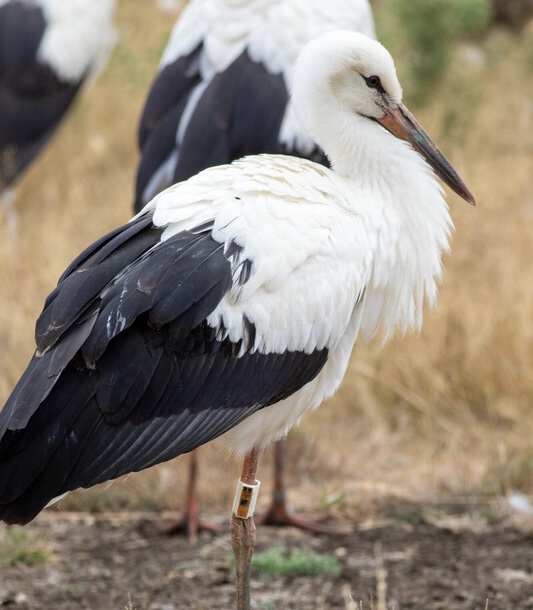
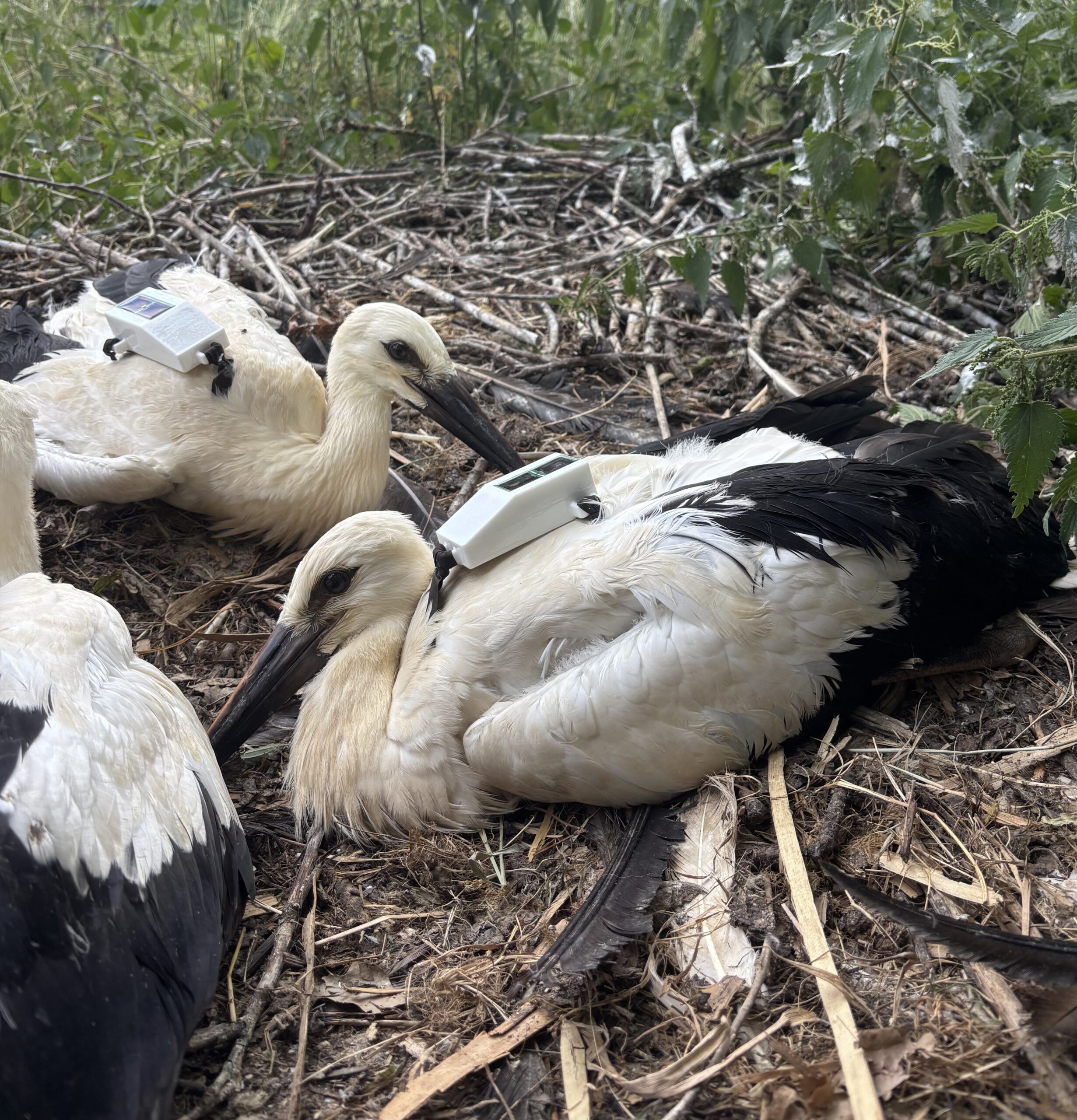
This year's discoveries have been made possible by the introduction of new tracking technology. E-rings are a lighter and more cost-effective alternative to conventional satellite trackers, allowing us to follow more birds than ever before. In total, we fitted 44 chicks with E-rings, alongside 20 birds carrying traditional backpack-style satellite trackers.
Unlike satellite trackers, which provide continuous GPS location data, E-rings use Bluetooth signals to communicate with nearby mobile devices. This allows us to collect location information when birds pass within range of a device, although the resulting data is less detailed.
(Thanks to our collaboration with the University of East Anglia and project partners Cotswold Wildlife Park, we now have our largest migration tracking dataset to date.)
Beyond the usual wintering grounds
After the first cohort completed the journey from the UK to Morocco in just eight days, most of this year's juveniles appear to have settled for the winter in either Morocco or Spain.
Tracking data suggests that many birds followed remarkably similar routes through Europe, potentially travelling alongside wild white storks. While we cannot confirm whether they were flying together, there are similarities in their movements.
Currently, 19 E-ringed birds are transmitting from locations in and around Kénitra, Morocco, a familiar wintering area for our project birds, while another 11 are recorded across Spain.
But not everyone has stopped there. Five individuals have ventured much further south.
Senegal: Crossing the Sahara
One of the most remarkable journeys belongs to GBDE, a male white stork hatched from one of the ground nests at Knepp this spring and was fitted with a satellite tracker.
After reaching Morocco, GBDE spent several weeks in the region before continuing south, crossing the Sahara Desert and reaching Senegal in West Africa. His location data places him close to a town, with agricultural land and a large river and delta system nearby.
This was the first time we had ever recorded a project bird traveling this far south. For a young stork undertaking its very first migration, it is an extraordinary journey.
Mauritania: Further into West Africa
GBDE is not the only bird to have ventured beyond Morocco. Three more project storks are currently transmitting from Mauritania, further south along the western African coast.
GBYC hatched in the wild at Knepp, while GBZU and GBZF hatched at Cotswold Wildlife Park before being released at Knepp this year.
As all three carry E-rings, we have less detailed information about the routes they took to reach Mauritania, however Satellite imagery suggests their current recorded locations are close to human settlements, with all three appearing to be in or near small urban areas.
It will be interesting to see whether they remain in Mauritania for the winter or continue further south.
Burkina Faso: Another unexpected destination
GBZA, a female stork hatched at Cotswold Wildlife Park and released at Knepp this summer, has travelled even further south.
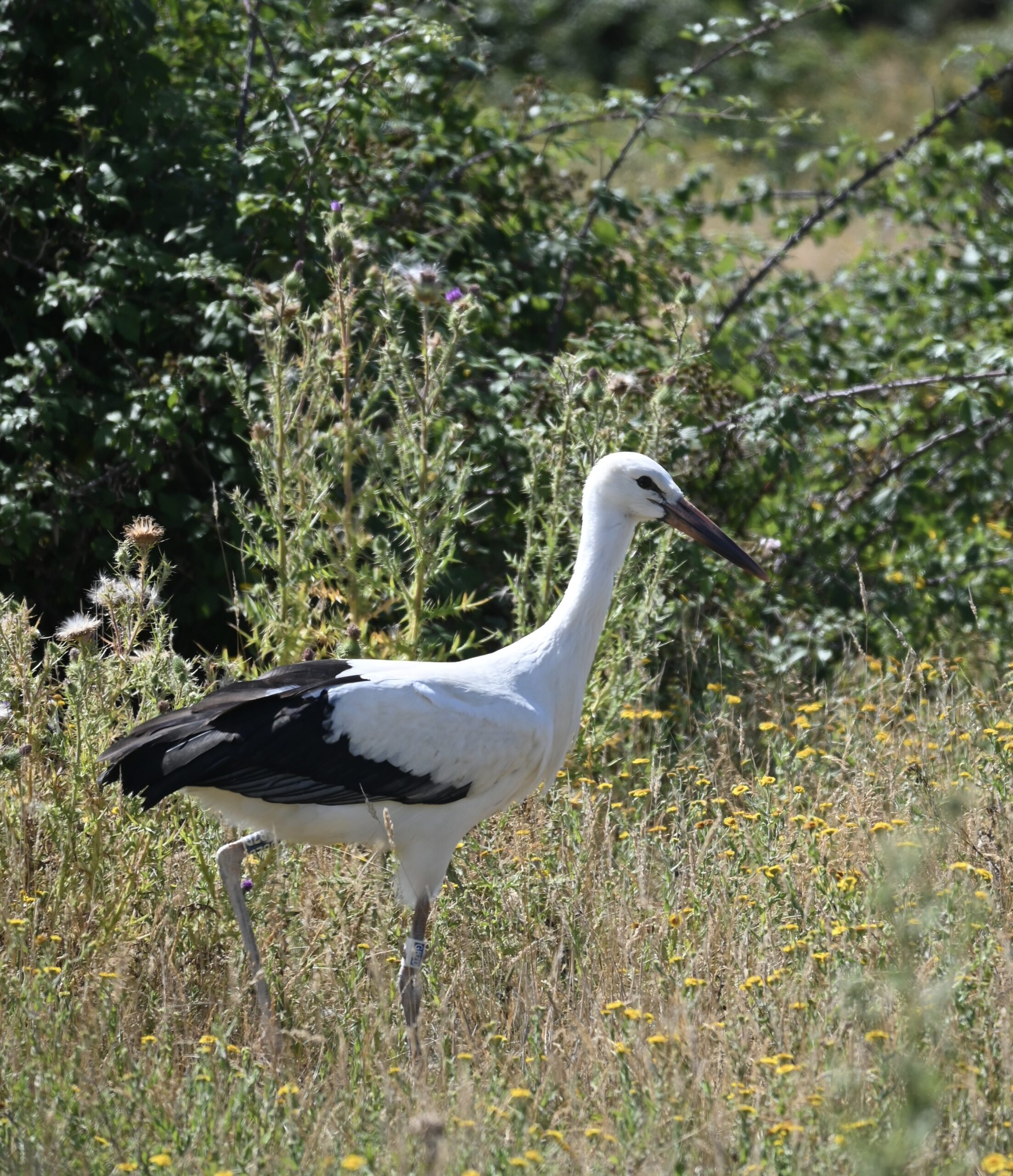
Supplementing her tracking data, it was fantastic to have received a report from Mustapha, friend of the project, that GBZA was feeding on the landfill in Kenitra. After spending a few weeks re-fuelling, data from her E-ring now places her at the Sahel Reserve in Burkina Faso, in a vast transitional landscape between the Sahara Desert and the savannahs further south.
Having watched GBZA take her first flight in the wild following her release at Knepp, it is incredible to see her now travelling thousands of kilometres across Europe and Africa.
What can these journeys tell us?
Seeing these young storks travel so quickly and venture so far south is incredibly exciting, offering an encouraging insight into the journeys birds hatched within the project are capable of undertaking.
Whilst we are incredibly excited to have recorded this milestone, project birds may have travelled this far south in previous years without us knowing. Until now, our ability to track individuals has been limited by the number of satellite transmitters available. With 44 additional birds carrying E-rings this year, we have a much greater chance of detecting movements that may previously have gone unnoticed. These records may therefore represent new discoveries for the project rather than entirely new behaviour.
What is clear is that tracking more individuals is helping us build a better understanding of the migration strategies of the growing UK population. We are particularly excited to have this long-distance movement recorded and look forward to seeing whether it becomes a recurring pattern in future years.
We are also working towards making the tracking maps publicly accessible, so you can follow the journeys of our storks and discover where they are travelling in near real time.
Keep an eye on our website and social media for further updates. There are still plenty of stories to uncover from this year's migration!