News
Migration news26/08/2026
This year’s great white stork migration is well underway, and our Project white storks have arrived in North Africa earlier than we’ve ever recorded before.
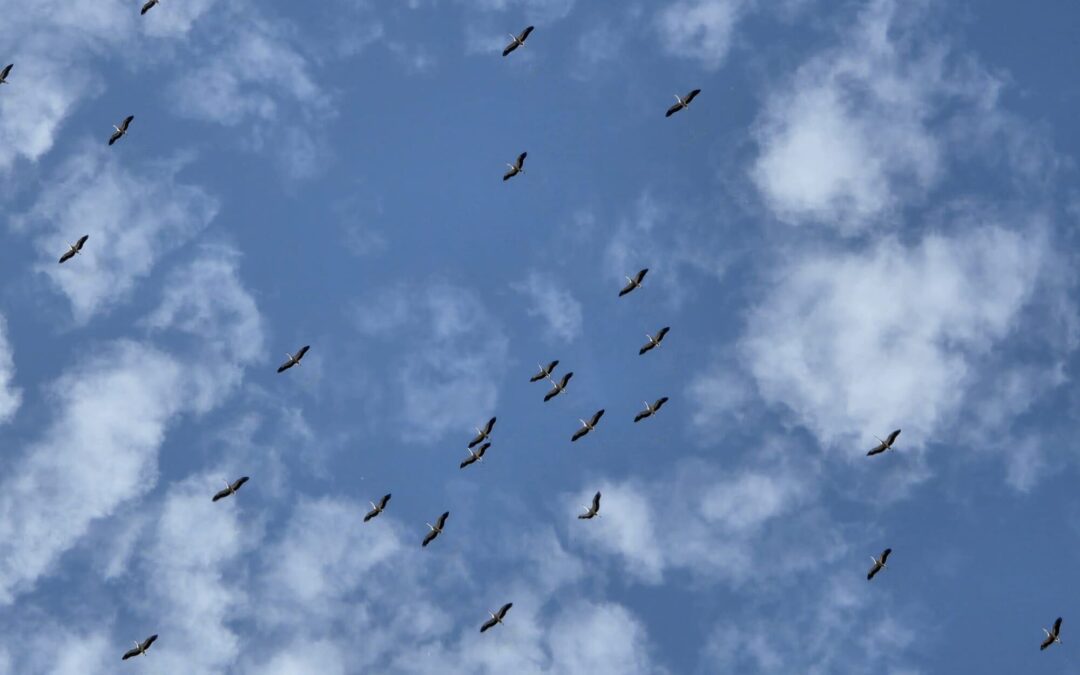
In previous years, migration has usually begun towards the end of August, although some birds have remained in the south of England as late as October. During August, we often see storks travelling up and down the south coast, with sightings stretching from Kent to Cornwall as they appear to search for suitable places to make the Channel crossing.
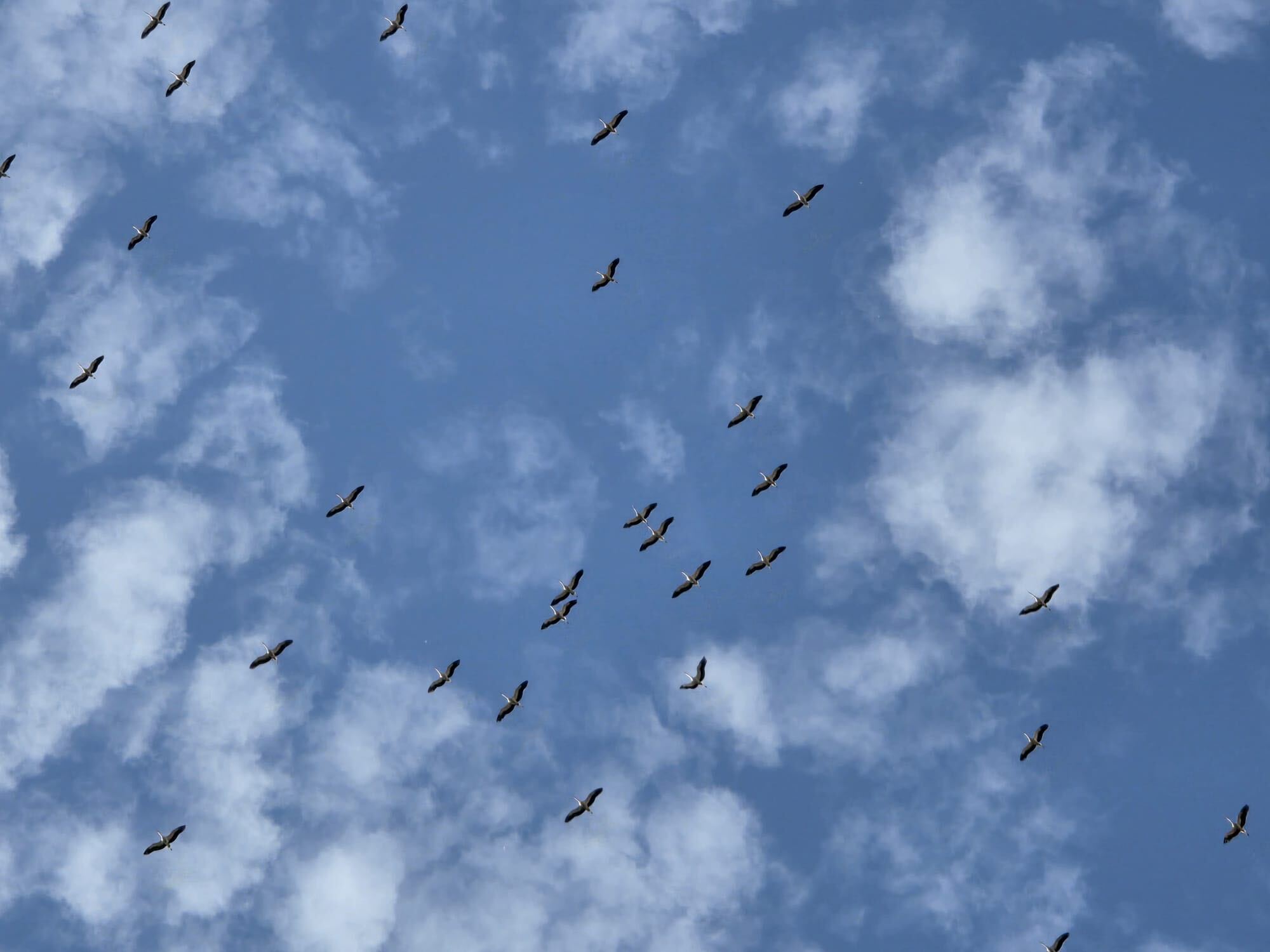
As large, soaring birds, white storks rely on rising columns of warm air, known as thermals, to gain height and glide efficiently over long distances. Over water, these thermals are much less available, making sea crossings considerably more energetically demanding. Finding the right place, and the right conditions, to cross is therefore an important part of their journey south.
An early start
This year, things have moved remarkably quickly.
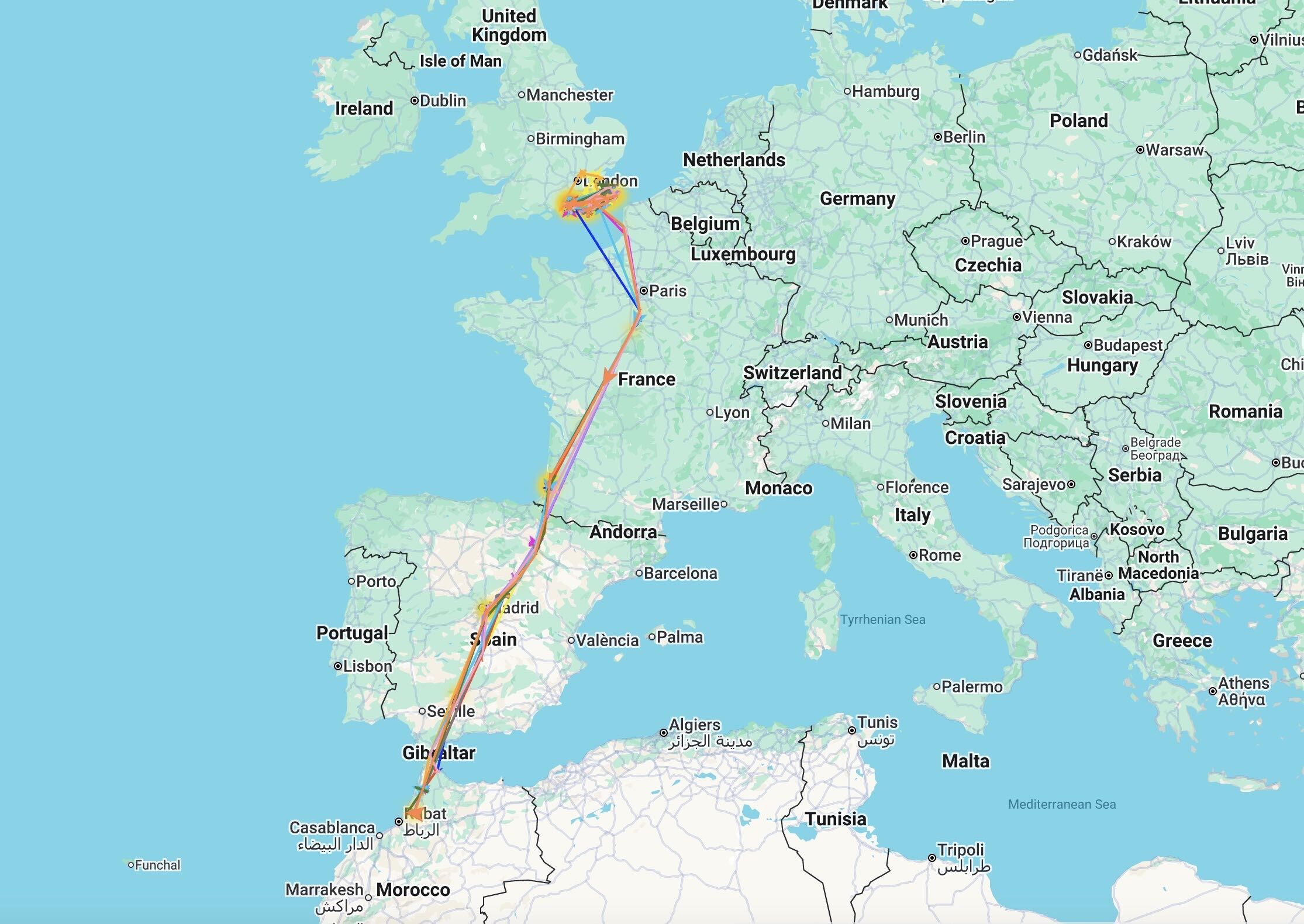
On 10 August, sightings near Pett Level, close to Hastings, suggested that a group of around 30 white storks was on the move. This coincided with tracking data showing some of our birds making the journey across the English Channel. Just eight days later, on 18 August, 11 individuals had been recorded in Morocco.
Our previous data suggests that the journey from England to North Africa typically takes around four to five weeks. This year, some birds appear to have completed it in only eight days, with others taking around 12 days.
One possible explanation is the hot weather experienced across much of Europe this summer. Warmer conditions can create the thermals soaring birds depend upon, potentially helping the storks travel efficiently over long distances. At the same time, reduced availability of food along the route could be encouraging birds to keep moving rather than stopping for extended periods.
But there may be another reason we’re seeing such an early arrival; we are collecting more data than ever before.
A new way to follow the storks
This year, 44 of our white storks have been fitted with new E-Rings, alongside birds carrying our more familiar backpack-style satellite trackers.
E-Rings use signals from nearby mobile devices, in a similar way to an AirTag, giving us location information from more birds than we have been able to track previously.
All 11 of the birds initially confirmed in Morocco were wearing E-Rings. This raises an intriguing possibility: perhaps white storks from the project have reached Morocco this early in previous years too, but we simply didn’t know they were there.
The technology is already giving us a much clearer picture of migration. Tracking shows birds following remarkably similar routes through France and Spain before crossing the Strait of Gibraltar into Morocco. What the data cannot always tell us is whether they are travelling together as one flock, breaking into smaller groups, or simply following the same well-established flyway at similar times. That’s where people on the ground become invaluable.
From Knepp to Kénitra
Towards the end of August, the colony at Knepp has become noticeably quieter as this year’s juveniles disperse south. A small number of birds remain in England, while many of the tracked youngsters are now travelling through France and Spain or have already reached Morocco.
Among the first wave to arrive are three particularly exciting young travellers.
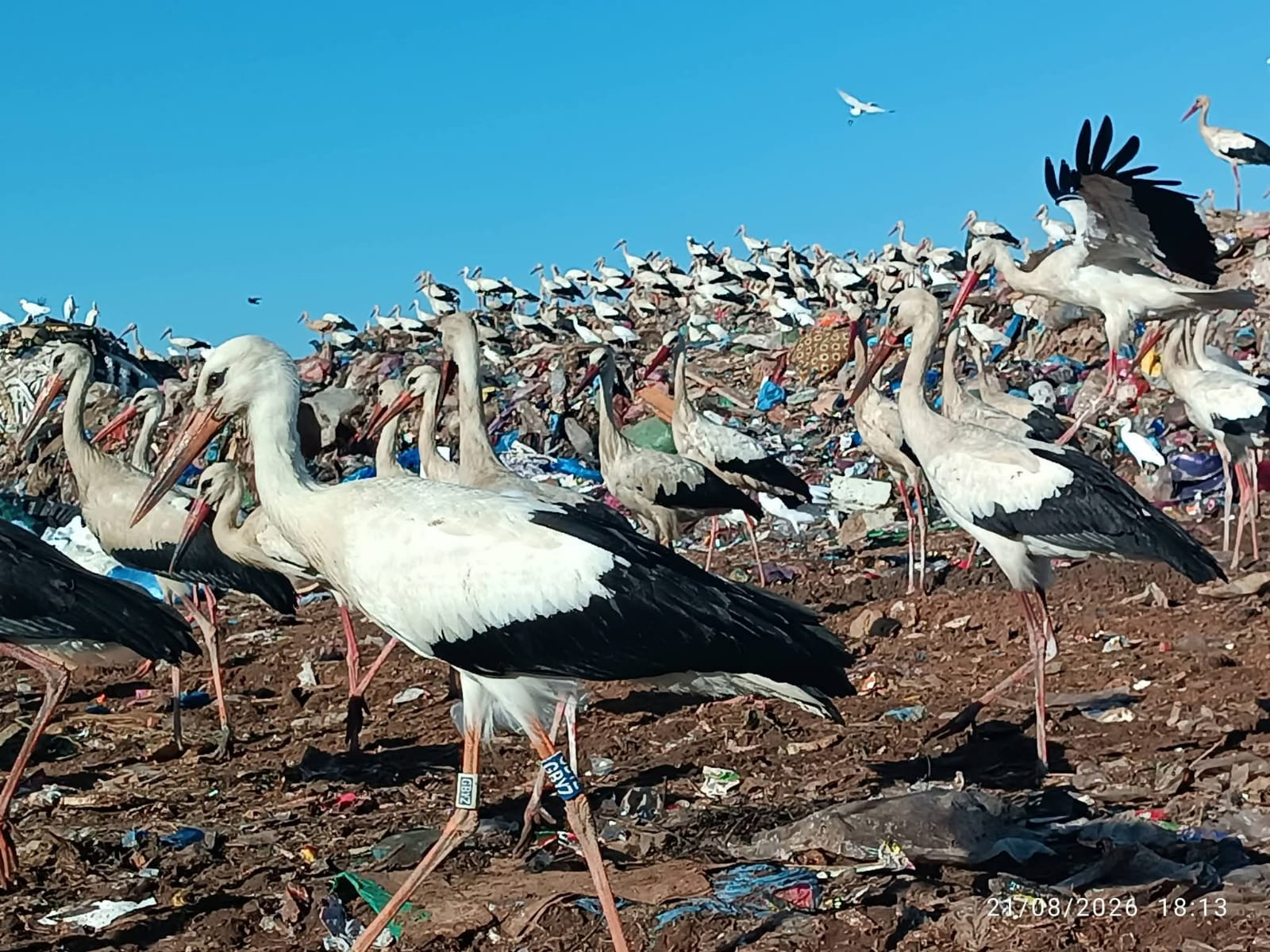
Our friend and project supporter Mustapha Abidi has photographed E-ringed birds GBZA, GBYZ and GBZU together in Kénitra, Morocco.
All three hatched this year at Cotswold Wildlife Park before being released at Knepp Wildland at the end of July. Less than a month after taking their first ever flights in England, these young birds had crossed the English Channel, travelled through France and Spain, crossed the Strait of Gibraltar and arrived side by side in Morocco.
It is an extraordinary journey for birds that, only weeks earlier, had never flown at all.
As Mustapha beautifully put it:
“The telemetry shows lines on a screen, but the field offers the truth, life and raw emotion.”
Tracking technology can show us the remarkable journeys these birds undertake: where they stop, the routes they follow and how quickly they travel. Seeing GBZA, GBYZ and GBZU on the ground in Morocco, thriving amongst large numbers of wild white storks, gives us another piece of the story. Observations and photographs from people along the migration route help us understand the landscapes the birds are using, the other storks they associate with and the conditions they encounter once they arrive.
This network of people following and protecting white storks across their migratory flyway is every bit as important as the technology we use to track them.
We are hugely grateful to Mustapha for sharing his photographs and, more importantly, for the vital work he does to protect white storks in Morocco. Having a dedicated friend of the project monitoring the birds on their wintering grounds gives us an invaluable connection between their lives here in England and their lives thousands of kilometres away in North Africa.
We’re excited to continue supporting Mustapha and his important conservation work in the future.
Meanwhile, the migration continues. Some of this year’s young storks are already settling into their wintering grounds in Morocco, others are still making their way south through Europe, and a few remain here in England.
Keep an eye out for more migration updates in the coming weeks as we continue to follow their journey.
Can you help support our tracking ambitions for next year? Please get in touch or donate if you think you can support this important work.