News
Preparing for breeding seasonVolunteers from Knepp and the White Stork Project recently took part in a day of hard work helping the non-flying storks prepare for the breeding season.
At Knepp, around 25 non-flying birds are kept safe in a large, predator-proof pen. These birds, originally from Poland, were rehabilitated following injuries sustained in the wild. Some flew into electricity pylons, others were involved in collisions with trains. Several have only one wing, making it especially difficult for them to gather nesting material.
To support them, the team delivers coppiced material from the Rewilding Project directly into the stork pen.
Recently, WSP staff and volunteers received training at Cotswold Wildlife Park, where staff shared valuable advice about the materials white storks prefer for nest building. Their captive population of white stork forms an important part of the wider project, producing more than 40 young birds each year. Most of these juveniles are released at partner sites in August to help strengthen the developing wild population.
Thanks to the expertise shared by Cotswold Wildlife Park, we now have a better understanding of how to support our ground-nesting, non-flying birds. Every stork has its own approach to nest building, and nests can be surprisingly varied. Across Europe, wild storks construct enormous nests in trees, on buildings and sometimes on infrastructure such as pylons. Here in the UK, our colony appears to favour the top of oak trees, while the non-flying birds build their nests on the ground, often at the base of trees.
Both flying and non-flying storks usually begin with spiky, scraggly material to start off their nests. At Knepp, they particularly favour hawthorn and blackthorn, and occasionally a determined individual will wrestle in a strand of bramble. This thorny material may act a little like Velcro, helping the nest bind together and stay secure.
The rest of the structure is built from a mix of hawthorn, hazel and oak twigs and branches and anything else the birds can get their beaks on. Typically, sticks are no thicker than an adult’s thumb, though they can be long, often reaching 50cm or more. Storks collect thousands of individual sticks to complete a nest. Both male and female gather material independently and place it carefully. Pairs will sometimes disagree over positioning, returning to the same stick again and again before reaching a final decision.
Nest building generally begins in mid-February and continues throughout the season. Even once eggs are laid and chicks have hatched, storks can be seen flying in with fresh material, removing soiled sticks and reinforcing the structure. After the main framework is complete, they line the nest with softer materials such as leaves, moss, grass or hay where available.
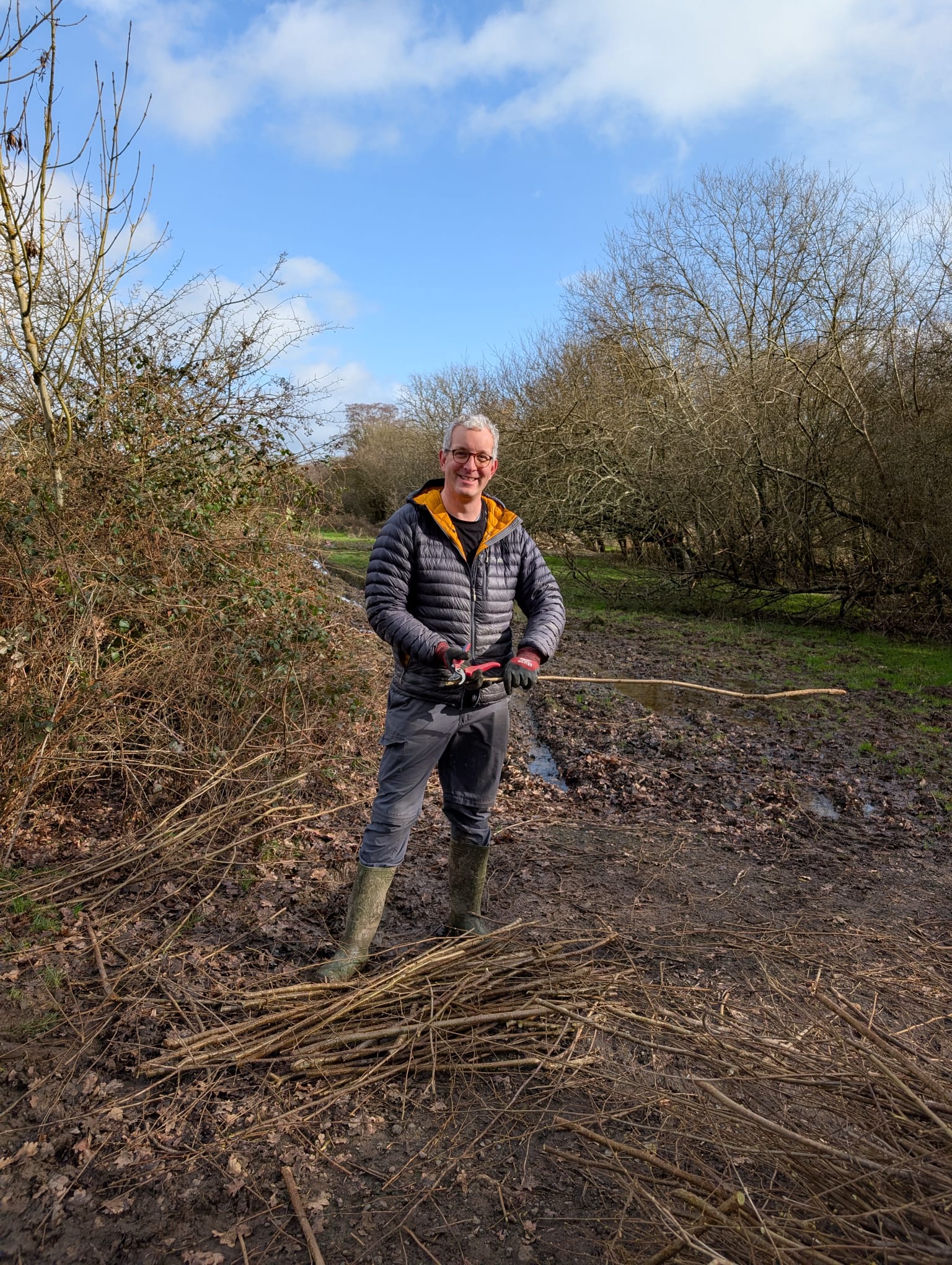
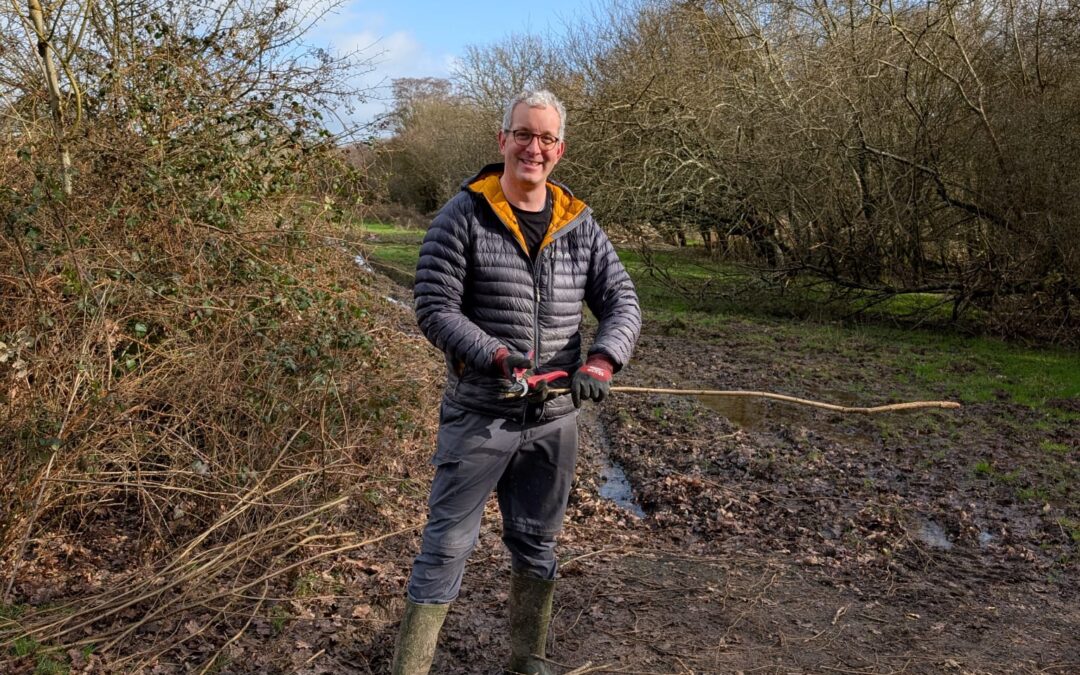
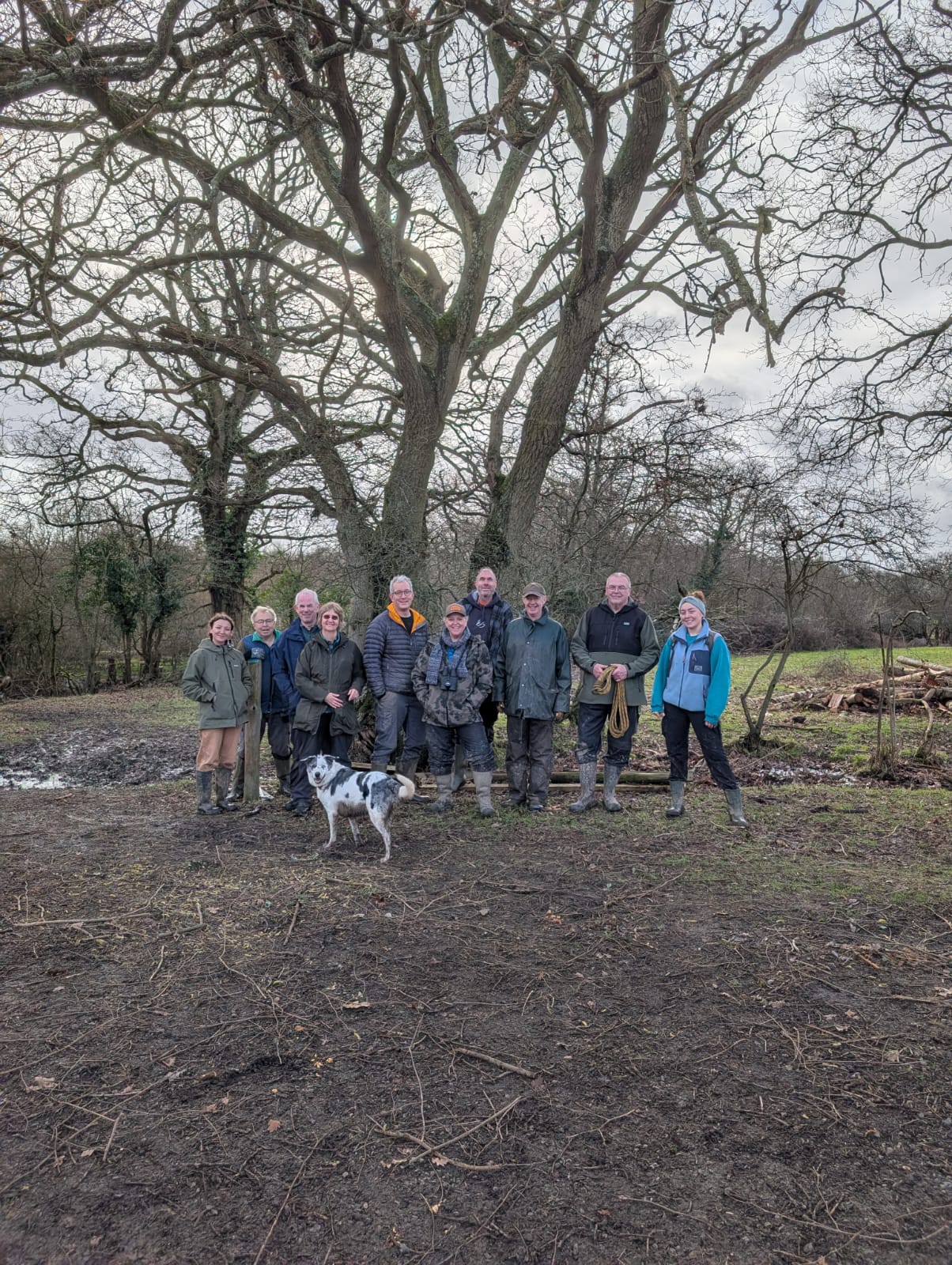
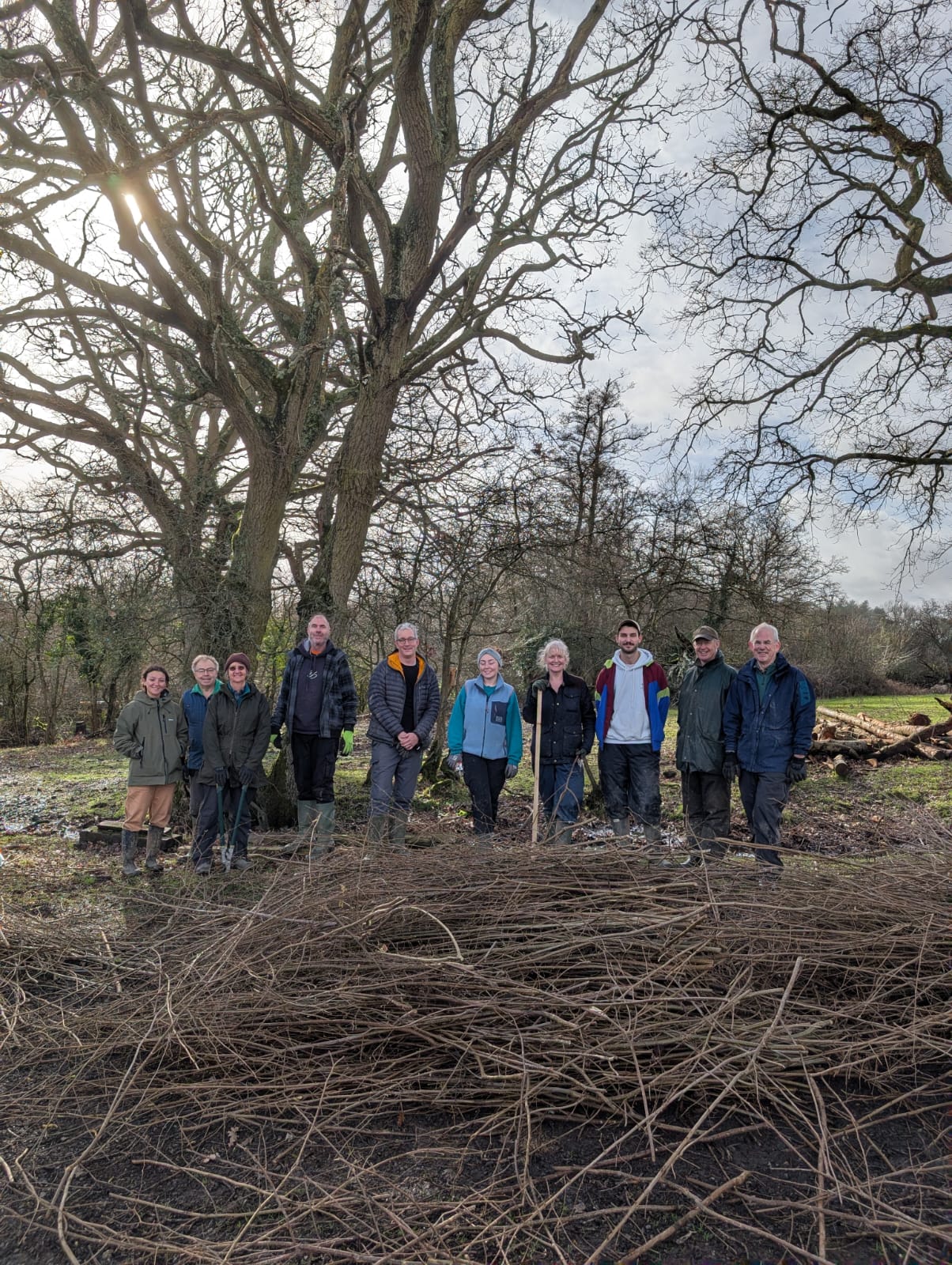
The volunteers at Knepp spent a long day coppicing and cutting hazel to stork-sized lengths before carrying it close to the area where the non-fliers build their ground nests. More than two trailer loads of sticks and branches were processed and delivered to the pen, thanks to the hard work of Knepp Ranger Steve, staff member Aaron and a small army of dedicated volunteers.
To learn as much as possible about stork nest-building and breeding behaviour, we have positioned several camera traps around the stork pen at Knepp. In addition, our live camera, which began streaming for the first time in 2023, has just been switched back on for the new breeding season.